
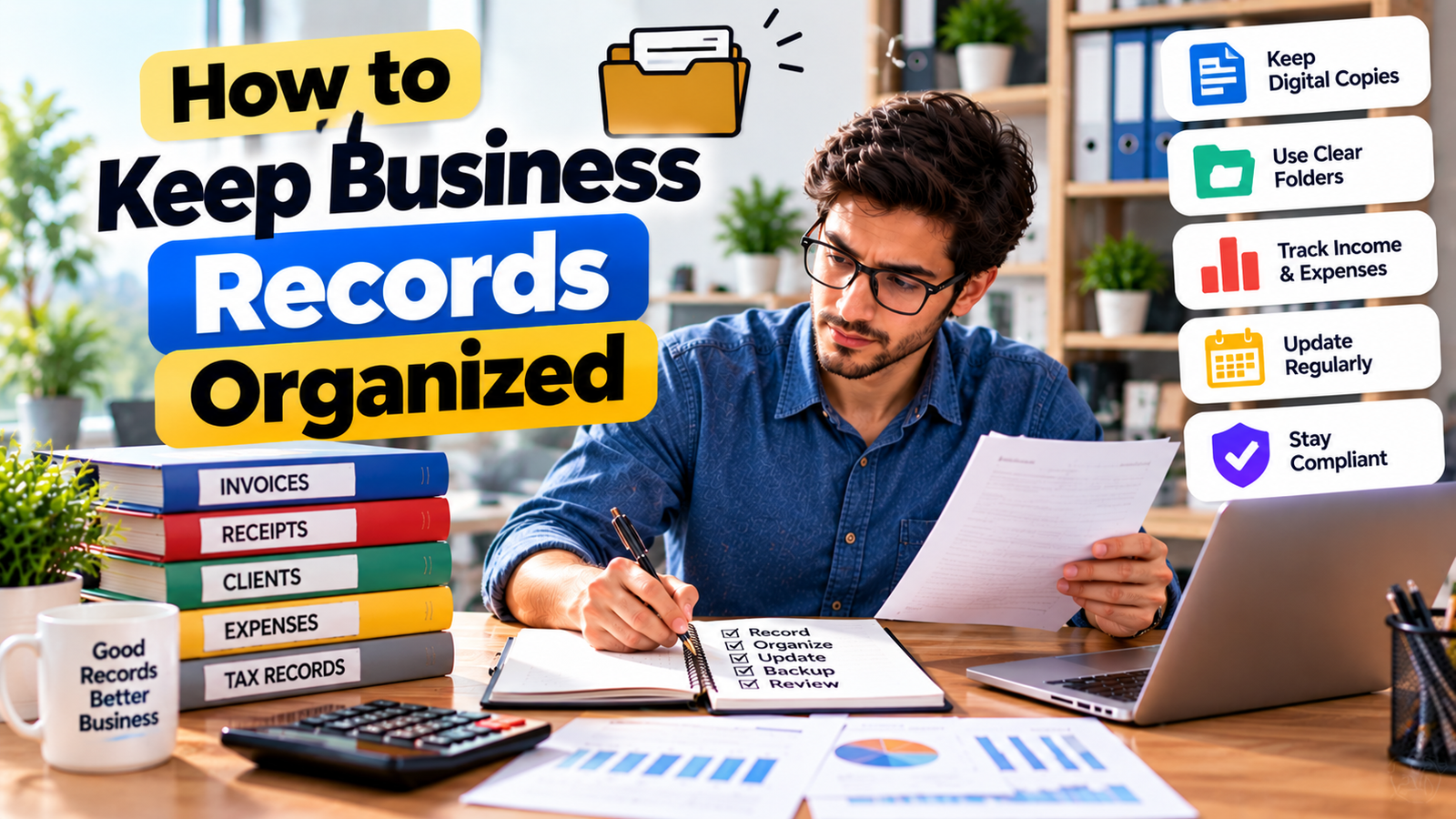
Keeping business records organized is one of the basic responsibilities of running a successful business. Records help you understand what is happening inside the business and make it easier to find important information when you need it.
For a small business owner, organized records can save time and reduce unnecessary stress. Instead of searching through emails, papers, folders, and messages, you can quickly find the information you need.
In my opinion, the best record keeping system is simple, consistent, and easy to maintain.
Understand Which Records You Need
The first step is understanding what records your business actually needs.
Depending on your type of business, you may need to keep sales records, expense records, invoices, receipts, customer information, supplier details, contracts, inventory information, employee records, and other business documents.
Do not collect and store information without a purpose.
Think about which documents you regularly use and which records are important for managing the business.
Create Clear Folders
A simple folder system can make business records much easier to manage.
For digital records, create folders based on categories.
For example, you might have folders for:
Business finances
Customer records
Supplier information
Invoices
Receipts
Marketing
Inventory
Important documents
Within these folders, you can create additional folders based on months or years if necessary.
The exact structure depends on your business, but the main goal is to make information easy to find.
Use Consistent File Names
A clear file naming system can save a surprising amount of time.
Instead of saving a document with a name like “document1” or “invoice new,” use a name that explains what the file contains.
For example, a file name could include the customer name, document type, and date.
When your files have consistent names, you can search for them much more easily.
Keep Financial Records Updated
Financial records are among the most important business records.
Keep track of income, expenses, payments, invoices, and other relevant financial information.
Do not allow financial records to build up for months.
Updating them regularly makes it easier to understand your business performance and identify financial problems early.
Keep Business and Personal Records Separate
If you operate a small business, it is important to keep business information separate from personal information.
Use separate folders for business documents and personal documents.
If possible, maintain separate financial accounts for business activities as well.
This makes business finances easier to understand and keeps records cleaner.
Save Important Receipts
Receipts can be useful when reviewing business expenses.
Keep them organized instead of leaving them scattered across your workspace or email inbox.
Digital copies can also be useful when appropriate.
Create a regular routine for collecting and organizing receipts so they do not become difficult to manage later.
Organize Customer Information
Customer records can help you understand your business and provide better service.
Depending on your business, you may need to record customer names, contact information, order history, communication details, or preferences.
Only collect information that is genuinely necessary and handle customer information responsibly.
Keep records secure and limit access to people who need them.
Keep Supplier Information Organized
Supplier records are also important.
Keep supplier contact information, pricing information, purchase records, agreements, and other relevant documents in an organized location.
When you need to contact a supplier quickly, you should not have to search through hundreds of old messages.
Maintain Inventory Records
If your business sells products, inventory records can help you understand what you have available.
Record incoming stock, outgoing products, damaged items, and other relevant changes.
Regular inventory updates can reduce mistakes and help you know when new stock may be needed.
Create a Backup System
Digital records can be lost because of computer problems, accidental deletion, or other technical issues.
For important documents, maintain backups.
You can use secure cloud storage, an external storage device, or another suitable backup method.
The important thing is to avoid having only one copy of critical business information.
Protect Sensitive Records
Business records may contain sensitive information.
Customer details, financial information, contracts, employee records, and other documents should be protected.
Use strong passwords and appropriate security measures for digital accounts.
Do not give access to business records to people who do not need them.
Good organization should always include good protection.
Review Old Records
Not every document needs to remain in your active folders forever.
Review old records regularly and determine which documents are still needed.
However, do not delete important records simply because they appear old. Some documents may need to be retained for legal, tax, financial, or business reasons.
When dealing with retention requirements, follow the rules that apply to your location and type of business.
Create a Weekly Record Keeping Routine
Record keeping becomes much easier when it is part of your regular schedule.
You could spend a short period each week organizing receipts, updating financial records, filing documents, and checking important information.
This is much easier than waiting until everything becomes disorganized.
Avoid Duplicate Files
Duplicate documents can create confusion.
If you have several versions of the same file, you may accidentally use an outdated version.
Use clear file names and keep the most current version easy to identify.
For important documents, you can include a date or version number when appropriate.
Use Spreadsheets Carefully
Spreadsheets can be useful for small business record keeping.
They can help track expenses, sales, inventory, customer information, or other data.
However, keep spreadsheets organized and update them consistently.
If a spreadsheet becomes too complicated, consider whether specialized business software would make the work easier.
Review Your System Regularly
As your business grows, your record keeping needs may change.
A system that worked when you had a small number of customers may become difficult when your business becomes larger.
Review your system from time to time.
Ask whether you can find important documents quickly, whether information is backed up, and whether your records are accurate.
Final Thoughts
Keeping business records organized is not difficult when you build good habits from the beginning.
Create clear folders, use consistent file names, organize financial records, keep customer and supplier information secure, maintain inventory records, back up important documents, and review your system regularly.
You do not need an overly complicated system.
A simple record keeping method that you follow consistently can save time, reduce confusion, and give you a clearer picture of your business.
Good records are not just paperwork. They are an important part of managing a business responsibly and making better decisions.


